
If your top and bottom measurements fall into different sizes, choose underlayers that accommodate those measurements rather than forcing a matching size. Separates may give you more flexibility than a one-piece garment. A smaller label is not a useful goal if the clothing does not fit comfortably.
A September wardrobe change can expose this issue when you try familiar clothes under different layers. It does not mean your body needs to change. It means the garments need to work together for the outfit you want to wear.
Use each garment's measurement points
A bra, brief and bodysuit do not necessarily use the same measurements. Read the chart for the selected item and measure at the points it identifies. Do not transfer a letter size from a favorite pair of leggings to an unfamiliar underlayer.
Write down which measurement controls each choice. If the chart gives conflicting results for your measurements, ask the retailer what it recommends instead of picking the smallest option.
For example, a top that fits your chest does not establish the correct size for a bottom worn at a different rise. Matching colors can be chosen separately from matching labels.
Decide whether you actually need a one-piece
A one-piece garment connects the fit of several areas. If the upper and lower sections cannot both fit comfortably, separate pieces may be the simpler choice. Do not assume stretching or stronger compression will correct that mismatch.
Start with the clothes you intend to wear over the underlayers. A loose shirt and separate trousers may not require the same solution as a close-fitting dress. You may already own a combination that works without adding another shaping garment.
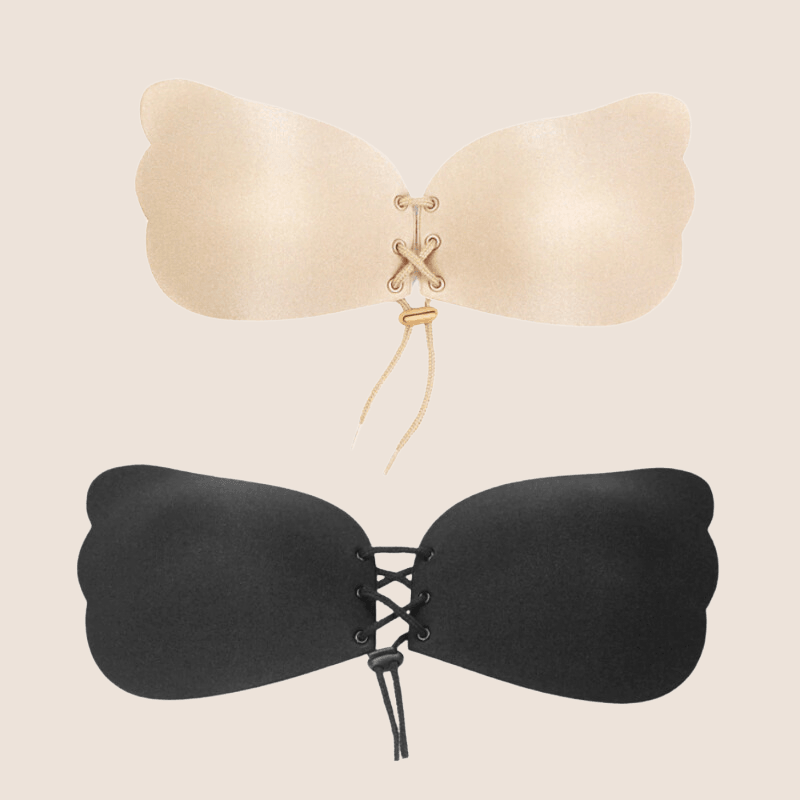
The Secret Push-Up Strapless Bra is a distinct product type, not an interchangeable alternative to every bra or one-piece. Check its construction, instructions and intended use before considering it for your outfit.
Evaluate the combination without changing your posture
Try the outfit while standing naturally and sitting normally. Check whether the underlayers remain comfortably positioned and whether closures or edges interfere with the clothing above them. You should not need to hold a particular pose to keep the outfit wearable.
If there is pain, numbness, breathing restriction or skin irritation, stop wearing the item and seek appropriate advice if symptoms persist. This guide is about clothing choices, not medical compression or treatment.
Do not use an adhesive product as a shortcut around an unresolved fit issue. Adhesive items have their own application and skin-use instructions and may not be suitable for everyone.
Build a small outfit record
Once you find a comfortable combination, note which pieces work together. Include the actual product and size rather than only “black set.” This makes repeat dressing easier and avoids ordering the wrong variant later.
Keep care instructions separate where required. Two pieces that match visually can need different cleaning routines. Replace only the piece that no longer works instead of assuming an entire set must be renewed.
The best underlayer plan respects your current measurements and the clothes you choose. Different sizes are simply useful information; they are not a flaw that clothing needs to conceal.
For the related basics, read our guide to underlayer fit and skin comfort.